

CBAM: Why Tunisian companies must act now
April 21, 2026
A carbon tax at Europe’s borders: what it means for Tunisian exporters
A new regulation that will change everything
The Carbon Border Adjustment Mechanism (CBAM) is one of the most impactful measures in the European Union’s climate policy. Its objective is to ensure that Europe’s decarbonization efforts are not undermined by imports of products manufactured using more carbon-intensive energy elsewhere in the world.
In concrete terms, companies exporting to the EU in the affected sectors—steel, aluminum, cement, fertilizers, hydrogen, electricity, and soon others—must declare the carbon footprint of their products. Starting in 2026, they will also need to purchase carbon certificates to cover this gap.
For Tunisian exporters, the message is clear: the carbon cost of your production will now directly impact your export competitiveness.
What this means for your business
Imagine two companies producing the same product and exporting it to Europe. The first relies on fossil-based electricity. The second has invested in a solar plant and covers a significant share of its energy needs with renewables. At equal price and quality, the second company will pay less in carbon taxes at the EU border—and will therefore be more competitive.
This is no longer just about environmental responsibility. It is about economic survival in the European market.
Fossil electricity: the first lever to act on
In an industrial company’s carbon footprint, electricity consumption often represents a significant share of emissions. It is also the most accessible and fastest lever to act on.
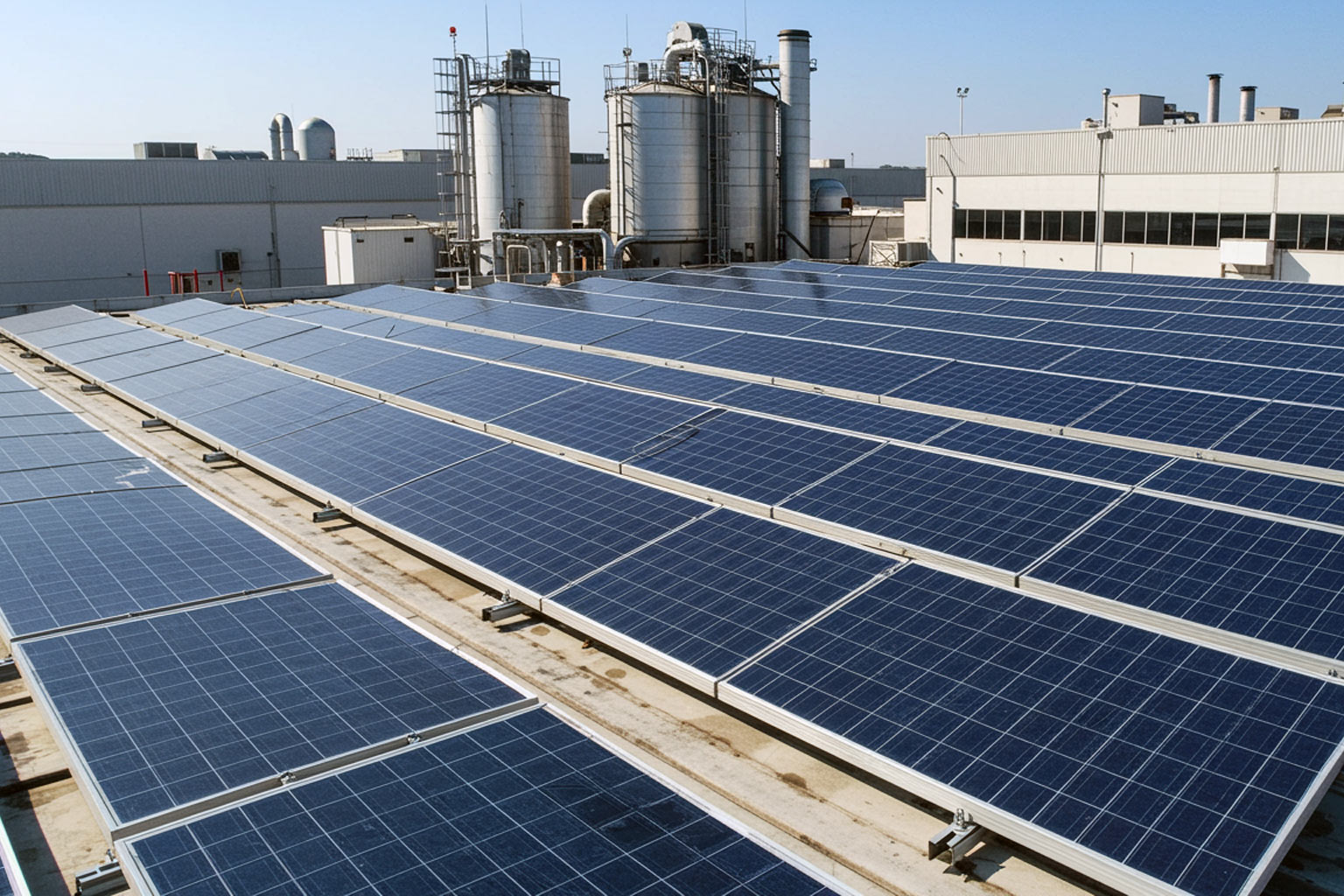
Switching to solar self-consumption means replacing part of your fossil-based electricity with renewable energy produced on-site. Every kilowatt-hour of solar energy consumed is one less fossil-based kilowatt-hour in your carbon footprint—and therefore fewer CBAM certificates to purchase at the EU border.
Anticipate rather than react
Companies that wait until 2026 to adapt risk finding themselves in a difficult position: having to invest urgently, without optimizing their installations or securing favorable financing conditions.
Those that act now, on the other hand, have time to properly size their projects, take advantage of available incentives such as the FTE grant, and even recover their investment before carbon penalties fully apply.
Africa Solar supports you in this transition
We help Tunisian companies understand their exposure to CBAM and implement concrete solutions to reduce their carbon footprint. A solar self-consumption plant is both a response to European requirements and a profitable investment for your business.
Tell us about your project. Our engineers will assess your situation free of charge and provide you with a tailored action plan suited to your activity and markets.