

Why is medium-voltage photovoltaic a strategic decision for your company?
April 21, 2026
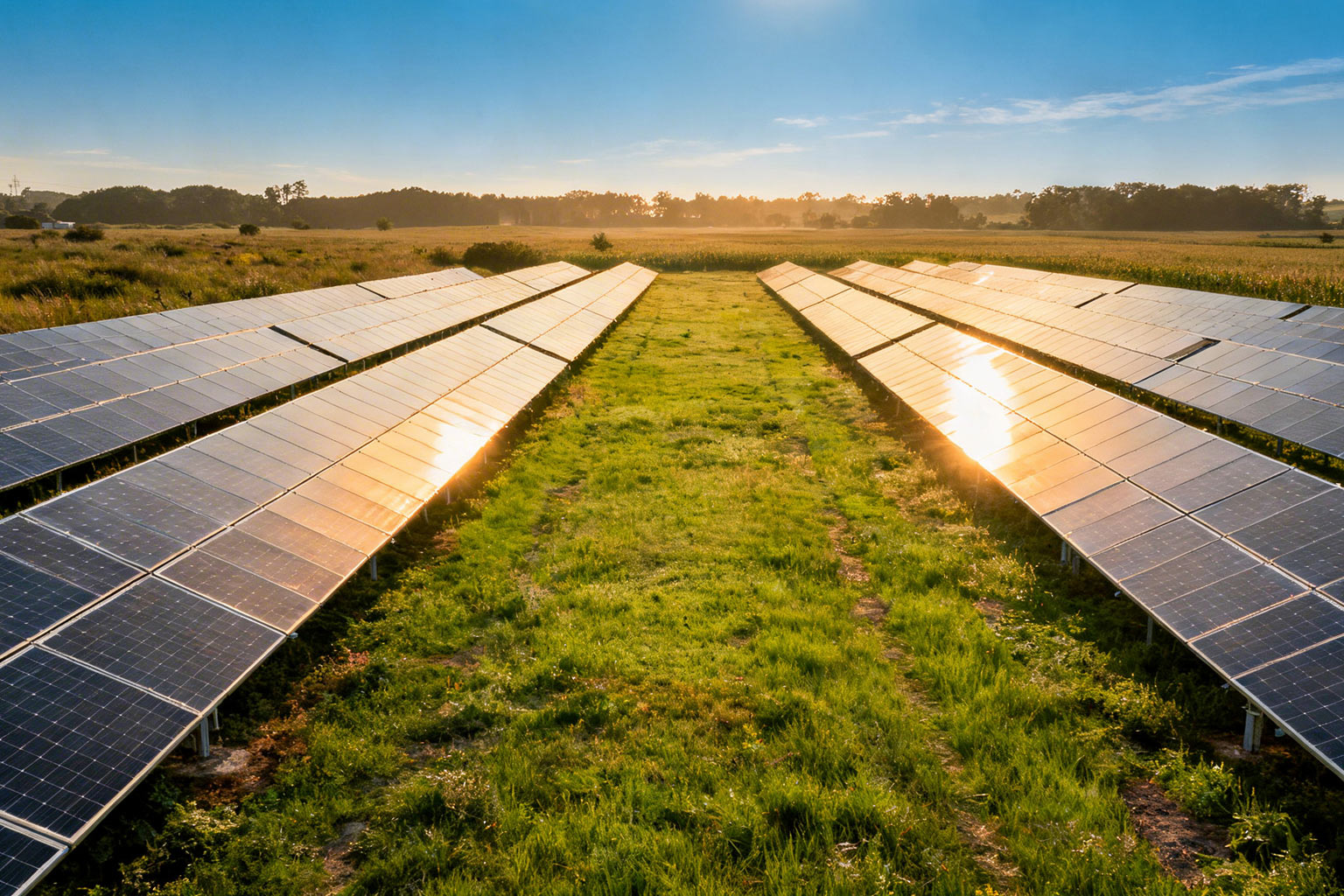
Electricity costs are not going to go down. The question is no longer whether you should switch to solar, but when.
A bill that keeps rising
For several years, electricity tariffs in Tunisia have been on an upward trend. For companies connected to Medium Voltage (factories, hotels, retail centers, agro-industrial facilities, etc.), energy often represents one of the largest operating expenses. And unlike labor or raw material costs, the STEG bill has long been considered a fixed expense that companies couldn’t control.
Medium-voltage photovoltaic changes that equation.
Producing your own electricity: a lever for competitiveness
The principle of solar self-consumption at MV level is simple: you install a photovoltaic plant on your site—on your roof or land—and directly consume the electricity produced. As a result, the portion of your consumption covered by solar costs you little to nothing.
The savings can reach 30% to 60% of your electricity bill, depending on your consumption profile and the size of the installation. With a return on investment typically between 4 and 7 years, and equipment lifespans exceeding 25 years, photovoltaic energy is one of the few industrial investments that offers such predictable long-term profitability.
A favorable regulatory framework in Tunisia
Tunisia has established the legal foundation for solar self-consumption with Law No. 2015-12 and its implementing decree No. 2016-1123. These regulations allow STEG subscribers in Medium and High Voltage to produce their own electricity, consume it on-site, and inject excess into the grid.
In addition, there is a concrete financial incentive: the Energy Transition Fund (FTE) can grant an investment subsidy of up to 20% of the total installation cost, capped at 200,000 TND for eligible projects.
An environmental commitment that becomes a competitive advantage
Beyond the financial aspect, producing solar energy also means reducing your carbon footprint. At a time when clients, banks, and export markets increasingly factor environmental criteria into their decisions, having a solar plant sends a strong signal to your stakeholders.
For companies exporting to the European Union, this is even becoming a necessity with the implementation of the Carbon Border Adjustment Mechanism (CBAM).
So, where to start?
Everything begins with a feasibility study: analysis of your consumption, assessment of your site’s solar potential, system sizing, and profitability simulation. At Africa Solar, this study is carried out free of charge and with no obligation.