
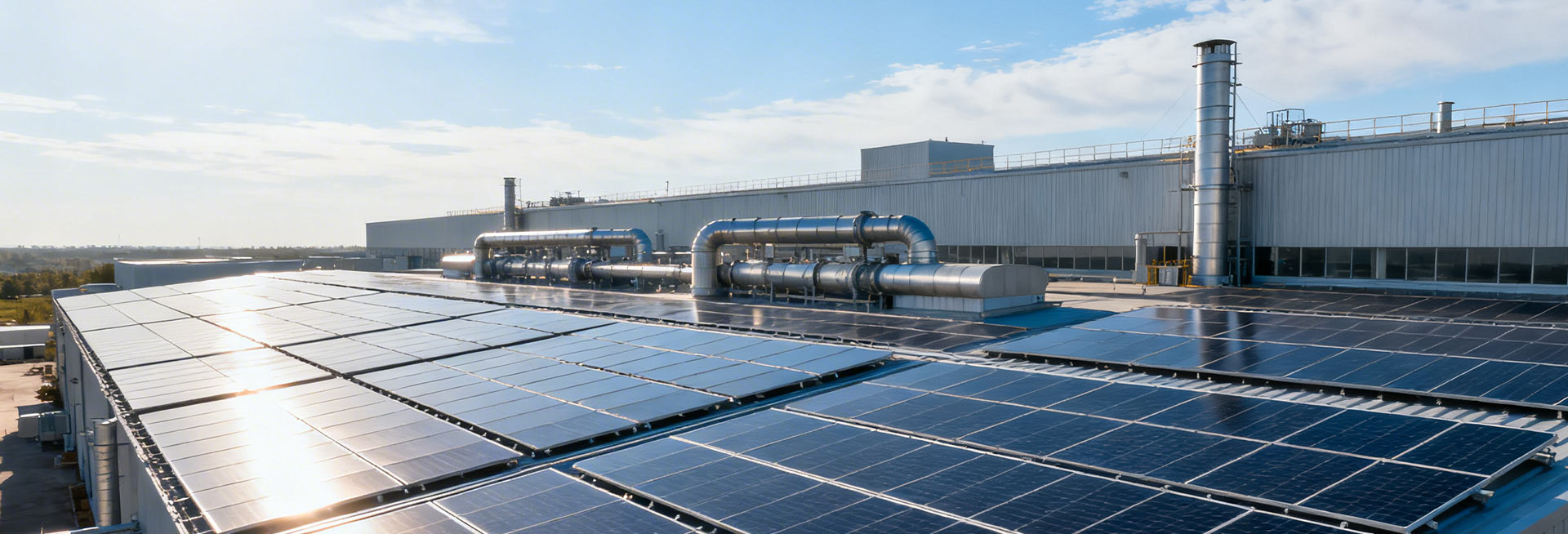
Every month, your STEG bill weighs on your margins. Every tariff increase erodes your competitiveness. What if the solution was on your roof?
Solar self-consumption allows you to generate your own electricity directly on-site and use it in real time. Less dependence on the grid, lower bills, and greater visibility over your energy costs for the next 25 years.
Reduce my costs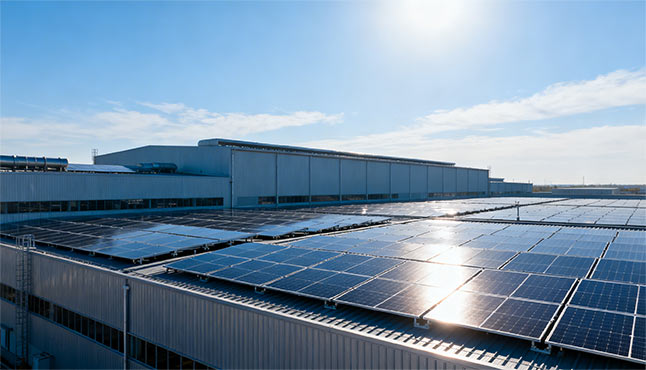
A solution designed
for high energy consumersThis solution is designed for industrial and tertiary companies, local authorities, and public or private institutions connected to the STEG grid in Medium or High Voltage. If energy represents a significant cost in your business, self-consumption is the right solution for you.
Simulate my profitability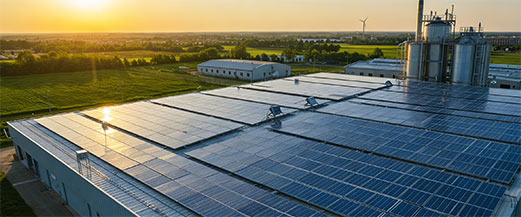
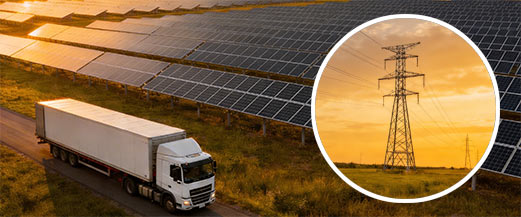

Thanks to the Energy Transition Fund (FTE), your company can receive a grant covering up to 20% of the total photovoltaic installation cost.
Your photovoltaic panels capture solar energy and generate electricity that your equipment consumes directly. In case of overproduction, the surplus is injected into the STEG grid and compensated according to current regulations. Simple, efficient, and regulated by Tunisian law No. 2015-12.

We do more than just install panels. We design your project from A to Z: energy audit, system sizing, FTE application, STEG procedures, installation, and commissioning. And we stay by your side afterward with performance monitoring and long-term maintenance.
Your sun, our expertise.
Your profitability, our commitment.
The company generates its own electricity through a photovoltaic installation and uses it directly to cover part of its energy needs. Any surplus production can be injected into the STEG grid and compensated according to current regulations.
Companies, local authorities, and public or private institutions connected to the national electricity grid in medium or high voltage (MV/HV), particularly in the industrial and tertiary sectors.
A textile factory in Tunis installed a self-consumption solar plant and reduced its STEG bill by 35%, saving several hundred thousand dinars per year, with a return on investment in less than 5 years.
The installation can be done on a building rooftop, a parking carport, or available land.
Yes. In this case, it is an off-site setup: the electricity produced is transmitted to the consumption site via the national STEG grid.
Yes. When electricity is transmitted through the grid, usage fees are charged by STEG according to current regulations.